As a registered nurse working in functional medicine, there are certain boundaries I take very seriously.
Functional nursing gives nurses an incredible opportunity to educate, coach, collaborate, research, identify patterns, and help clients better understand their health. But being a functional medicine nurse does not change the scope of practice attached to your nursing license.
Whether you are an RN, LPN/LVN, or nurse practitioner, you need to understand what your license allows you to do and make sure your language, marketing, services, and client interactions accurately reflect that scope.
Here are five things I would never do as a functional medicine nurse and why I believe these distinctions are so important.
1. I Would Never Present Myself as a “Functional Nurse Practitioner”
I clearly identify myself as an RN, disclose my credentials, and define my scope. Clients should understand that I am not a nurse practitioner.
Yes, nurses can lawfully obtain board certification credentials from private organizations. However, it is important that the credentials and titles you use do not cause confusion about your underlying professional license or scope of practice.
One thing I am exceedingly cautious about is the fact that the words “nurse” and “practitioner” used together can be confusing. A patient may reasonably assume that someone calling herself a “Functional Nurse Practitioner” is a licensed nurse practitioner.
I also do not simply say that I am an FMP. I am very clear that I am a registered nurse and a board-certified functional medicine practitioner. I chose to obtain an additional board certification credential as a functional medicine practitioner.
Because of that, I have made the extra effort to explain in my marketing materials and consent forms that I am not a nurse practitioner and I do not independently diagnose, treat, prescribe, or medically manage medical conditions.
We want to make it crystal clear exactly what our scope of practice is and how we are able to utilize functional medicine modalities within that scope.
Your additional certifications do not replace or expand the legal authority granted by your underlying professional license.
2. I Would Never Use Laboratory Testing Outside My Nursing Scope
Depending on state law and laboratory policies, nurses may have access to certain testing. Functional laboratory testing can be a wonderful asset for a functional medicine nurse, but it is important to understand how you are accessing those labs and how you are using the information.
For example, if an RN or LPN/LVN facilitates laboratory testing through a physician and partnering laboratory, the nurse is not independently ordering those labs under the RN or LPN license. The authorized provider is responsible for the medical order.
There may also be certain non-invasive tests that are not being used to diagnose a medical condition—such as some genetic testing using a cheek swab or urinary hormone testing—for which a laboratory may allow an RN or LPN/LVN to establish a practitioner or reseller account.
However, laboratory access and nursing scope can vary significantly by state. I always recommend checking with your individual Board of Nursing and/or a healthcare attorney for clarification about what is permitted in your state before offering testing independently.
When reviewing laboratory results, nurses can make objective statements and provide education about the information without using those results to independently diagnose a medical condition.
For example, a nurse may educate a client about optimal ranges for thyroid levels or objectively point out that a client's vitamin D level is below the laboratory range.
That is different from using thyroid laboratory data to independently diagnose that client with hypothyroidism.
Collaboration Is an Important Part of Functional Nursing
One of the top reasons I reach out to medical providers is when I believe something requires evaluation or medical management outside my scope.
For example, perhaps a client is already taking thyroid hormone and their symptoms and laboratory results raise a question about whether their current medical management needs to be reassessed.
In that situation, I may write a letter to the client's primary care provider, attach the client's laboratory results and pertinent symptoms, and ask the provider to evaluate whether an adjustment to the client's thyroid medication is appropriate.
I may also include pertinent references and thank the provider for their collaboration.
I am not adjusting the medication. I am bringing information to the licensed medical provider who has the authority to make that decision.
That is an important distinction.
What About Functional Medicine Testing?
Functional testing can be a different area.
For example, a test such as a GI-MAP is commonly used in functional health settings to provide information about the gastrointestinal environment and microbiome. That information may be useful when providing education about gut and microbiome health.
Providing general wellness education about strategies such as fiber intake to support microbial diversity or nutrients that support the gastrointestinal barrier is very different from using laboratory testing to independently diagnose a medical condition and then prescribing natural therapies to treat that condition.
Out of an abundance of caution, whenever laboratory testing is involved—whether functional testing or conventional blood testing—I advise my clients to discuss their laboratory results with their medical provider and to discuss changes to their nutrition, supplements, exercise, or medical therapy with their medical provider.
3. I Would Never Recommend a Supplement as Treatment for a Medical Condition Outside My Scope
There is an important distinction between an advanced practice provider who has the authority to diagnose and treat medical conditions and an RN or LPN/LVN providing functional nursing services.
A nurse practitioner, when permitted by their state's laws and individual practice authority, may recommend a supplement as part of the treatment or management of a medical condition.
An RN or LPN/LVN would not independently make a direct supplement recommendation to treat a medical condition when doing so falls outside the nurse's licensed scope.
Instead, a nurse can provide education about supplements, discuss available research, explain their potential role in general health and wellness, and make recommendations for the client to discuss with their treating medical provider.
For example, there is a difference between educating a client about the evidence surrounding a particular nutrient and telling the client that you are prescribing that nutrient to treat their diagnosed medical condition.
The distinction is not necessarily the product itself.
It is how you are using it and what you are claiming it is being used to do.
Using a supplement to support general wellness is different from prescribing that supplement as a treatment for a diagnosed medical condition.
4. I Would Never Prescribe a Therapeutic Diet to Treat a Medical Condition
There is a lot of confusion in this area because state laws vary regarding who can provide nutrition advice, create individualized meal plans, or prescribe therapeutic nutrition.
As a general rule of thumb, nutrition coaching and nutrition education may fall within nursing practice, subject to the nurse's state law, education, employer or practice setting, and individual scope.
That is different from independently prescribing a therapeutic diet as a treatment plan for a medical condition.
Those activities may be restricted under state law or reserved for professionals with appropriate authority or credentials, such as registered dietitians or appropriately licensed advanced practice providers.
Meal planning is another area where nurses need to be careful.
I have had clients ask me in the past to create individualized meal plans for them. In situations where I determined that was outside my scope, I explained that I could not create a prescriptive meal plan specifically designed to treat their medical condition.
Instead, I can provide resources such as recipe bundles, nutritional guides, healthy meal ideas, research, and general nutrition education.
There is a meaningful difference between:
“Here are examples of nutritious meals and recipes that you may want to consider.”
and
“Here is the therapeutic meal plan I am prescribing to treat your medical condition.”
Again, your language matters.
5. I Would NEVER Advertise That I Independently Diagnose, Prescribe, Treat, or Medically Manage Conditions Outside My Licensed Scope
This is an area where I recommend being exceedingly cautious.
I would not outsource the terminology I use to describe my scope of practice to assistants who may not be performing appropriate due diligence—or to AI that may simply generate standard functional medicine marketing language without considering my nursing license, State Nurse Practice Act, or applicable regulations.
I frequently see functional medicine practitioners who do not have independent diagnostic or medical treatment authority use language such as:
“I'm treating this client.”
or
“I'm managing this condition.”
Those are words I teach functional nurses to be cautious about because that language can imply that you are independently diagnosing, treating, or medically managing a medical condition.
Functional nursing is about educating, coaching, collaborating, researching, identifying patterns, and helping clients better understand their health.
You do not have to describe those services as medical treatment for them to be valuable.
Be Careful With the Words “Medical” and “Medicine” in Your Business
It is also important to understand that the term functional medicine does not itself mean that every professional using functional medicine principles is legally engaged in the practice of medicine.
Functional medicine principles and modalities can be incorporated into different licensed professional roles.
However, if you are an RN or LPN/LVN without independent medical practice authority, I believe it is best to be cautious about using terms such as “medical” or “medicine” in the name of your independent business.
Terms such as health, wellness, functional nursing, nursing consulting, education, or coaching may more accurately communicate the nature of the services being provided and reduce the potential for confusion.
The goal should always be transparency.
Your clients should know your credentials, what type of professional you are, what services you provide, and what you do not provide.
Functional Nursing Is Not the Same as Practicing Medicine
This is one of the most important concepts I teach functional nurses.
You don't have to practice medicine to practice functional nursing.
An RN or LPN/LVN does not suddenly become a physician or nurse practitioner by completing a functional medicine education program or earning an additional private certification.
But that does not mean nurses have nothing meaningful to offer in this space.
Quite the opposite.
Functional nurses can educate, coach, research, collaborate with healthcare providers, help clients organize health information, identify patterns, provide general health and wellness education, and help clients become better-informed participants in their healthcare.
The key is understanding the boundary between nursing and medical practice and staying on the appropriate side of that boundary.
A Note for Functional Nurses Using AI
AI can be an incredible tool, but nurses need to be VERY careful when using AI to write website copy, social media posts, client materials, or business descriptions.
AI-generated content can use language that doesn't account for your license, your state's Nurse Practice Act, or other regulations.
If AI writes that your practice “treats thyroid disease,” “manages autoimmune conditions,” “prescribes personalized protocols,” or “diagnoses root causes,” do not assume that language is appropriate simply because it sounds professional.
Your language matters.
You are ultimately responsible for making sure that the services you advertise accurately represent what you are legally authorized to provide.
The Bottom Line for Functional Medicine Nurses
Functional nursing does not require nurses to pretend to be something they are not.
There is tremendous value in the nursing role itself.
Know your scope. Stay within it. Clearly disclose your credentials. Collaborate when something falls outside your authority. And recognize just how much you can do as a nurse.
You don't have to practice medicine to practice functional nursing.
Scope of practice, nutrition laws, laboratory regulations, professional-title requirements, and the ability to access or facilitate laboratory testing vary by state, professional license, and laboratory. Nurses should review their individual State Nurse Practice Act, Board of Nursing guidance, applicable state laws, and laboratory requirements and seek guidance from a qualified healthcare attorney when necessary.
Frequently Asked Questions About Becoming a Functional Nurse
What is a functional nurse?
A functional nurse is a licensed nurse who applies the principles of functional medicine to educate and empower clients by helping them identify and address potential root causes of health concerns. Functional nurses focus on nutrition, lifestyle, sleep, stress management, environmental influences, and other evidence-informed approaches while practicing within their nursing scope of practice.
What is the difference between a functional practice owned by a NP and RN or LPN?
Nurse practitioners may operate a medical practice where permitted by state law. Depending on their state's regulations, NPs may diagnose medical conditions, order and interpret laboratory testing, prescribe medications, and provide medical treatment.
RNs and LPNs can own and operate independent wellness-focused functional nursing practices. Rather than diagnosing or treating medical conditions, they educate and empower clients through personalized wellness plans, nutrition and lifestyle education, health coaching, specialty laboratory education and on going support.
How Do Non-Advanced Practice Functional Nurses Utilize Laboratory Testing?
RNs and LPNs can access both conventional and specialty laboratory testing through partnerships with functional medicine laboratories. These partnerships allow nurses to order testing through a physician network at affordable wholesale pricing, while practicing within their professional scope.
While nurse practitioners (NPs) may have the authority to diagnose medical conditions and independently order laboratory testing depending on their state laws, non-advanced practice nurses use laboratory data to educate clients about potential patterns of dysfunction. Laboratory findings can also help guide personalized wellness recommendations and support collaboration with the client's healthcare team to optimize health outcomes.
Please note: Certain states, including New Jersey (NJ) and Rhode Island (RI), have restrictions on laboratory ordering through some functional medicine laboratory networks.
Does Functional Nurse Academy provide continuing education for nurses?
Functional Nurse Academy is an approved provider of continuing nursing education. Graduates receive 90 nursing contact hours, approved for LPNs, RNs, and NPs.
The program combines comprehensive functional medicine education with practical application, case studies, and business mentorship, giving nurses the knowledge, tools, and confidence to launch and grow their own functional wellness businesses.
Can I become board certified after completing Functional Nurse Academy?
Yes! Functional Nurse Academy graduates are eligible for the following practitioner level board certifications through American Association of Natural Wellness Practitioners (AANWP)
- Functional Medicine Nurse Specialist | BC-FMNS
- Functional Medicine Practitioner | BC-FMP
- Functional Wellness Professional | BC-FWP
- Christian Wellness Practitioner | BC-CWP (for students completing our optional Christian content)
Below are the coaching credentials that our graduates qualify for through the American Association of Natural Wellness Coaches (AANWC)
- Functional Nurse Health Coach | BC-FNHC
- Functional Health Coach | BC-FHC
This program has been peer-reviewed and is endorsed by The American Holistic Nurses Association
CEs earned from the Functional Nurse Academy meet CE eligibility requirements for the following American Holistic Nurses Association board certification titles:
- HN-BC® (Holistic Nurse Board Certified)
- HNB-BC® (Holistic Nurse Baccalaureate Board Certified)
- AHN-BC® (Advanced Holistic Nurse Board Certified)
- APHN-BC® (Advanced Practice Holistic Nurse Board Certified)
- NC-BC® (Nurse Coach Board Certified)
What is included in enrollment?
Functional Nurse Academy is the leading and most comprehensive functional nursing program on the market for LPN, RN and NP. Enrollment includes the following:
- 90 Nursing Contact Hours of functional nursing education
- Multiple Board Certification Pathways in functional medicine and holistic nursing
- Functional Nurse Toolkit with business resources and practice-building tools
- Social Media & Marketing Kit with 9 months of content, brochures, and business card templates
- 40+ Advanced Trainings covering functional medicine and business strategy (available in FNA monthly mentorship library)
- Six Months of FNA’s Monthly Mentorship Program FREE, including live educational trainings and 60 minutes of live Q&A each month, all hosted by FNA Founder Melissa Schreibfeder, BSN, RN, BC-FMP, plus case studies and full access to the mentorship library.
Functional Nurse Academy is the nation’s leading and most comprehensive functional nursing education program for LPNs, RNs, and NPs
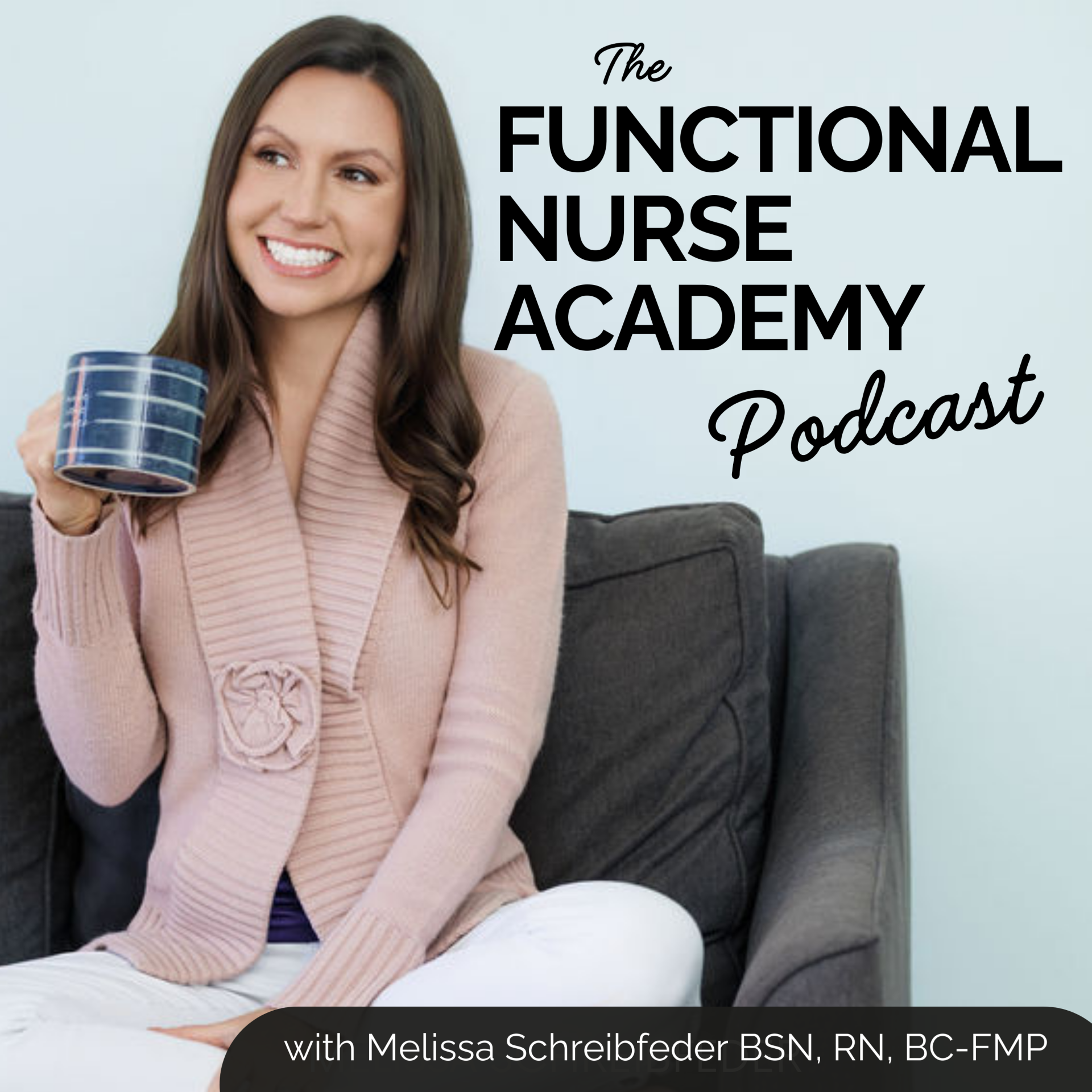
Founded in 2022 by Melissa Schreibfeder, BSN, RN, BC-FMP.
We are Dual Accredited, Peer Reviewed and Endorsed
American Holistic Nurses Association Endorsed and Peer Reviewed
Institute for Functional Medicine Interprofessional Partner
Approved Provider of Continuing Nursing Education. Approved for 90 Nursing CEs
Accredited for multiple board certification titles through AANWP, AANWC & AHNCC
Write your awesome label here.
Ready to take the next step?
I’m so happy you’re interested in functional nursing! I’d love to connect with you at my next live informational + Q&A webinar, where you’ll learn all about functional nursing, how nurses across the country are launching their own functional wellness businesses, and how you can get started.
You’ll also have the opportunity to meet me live and get all of your questions answered!
Just click below to save your seat! I hope to see you there!
-Melissa Schreibfeder, BSN, RN, BC-FMP Founder & CEO, Functional Nurse Academy
You’ll also have the opportunity to meet me live and get all of your questions answered!
Just click below to save your seat! I hope to see you there!
-Melissa Schreibfeder, BSN, RN, BC-FMP Founder & CEO, Functional Nurse Academy
Contact us
Thank you!
Functional Nurse Academy is the nation’s leading and most comprehensive functional nursing program for LPNs, RNs, and nurse practitioners. Founded in 2022 by Melissa Schreibfeder, BSN, RN, BC-FMP.