Lyme disease can be difficult to recognize, particularly when someone has persistent symptoms and several possible contributors to their illness. Mold exposure, other tick-borne infections, and a person’s overall health can complicate the picture further.
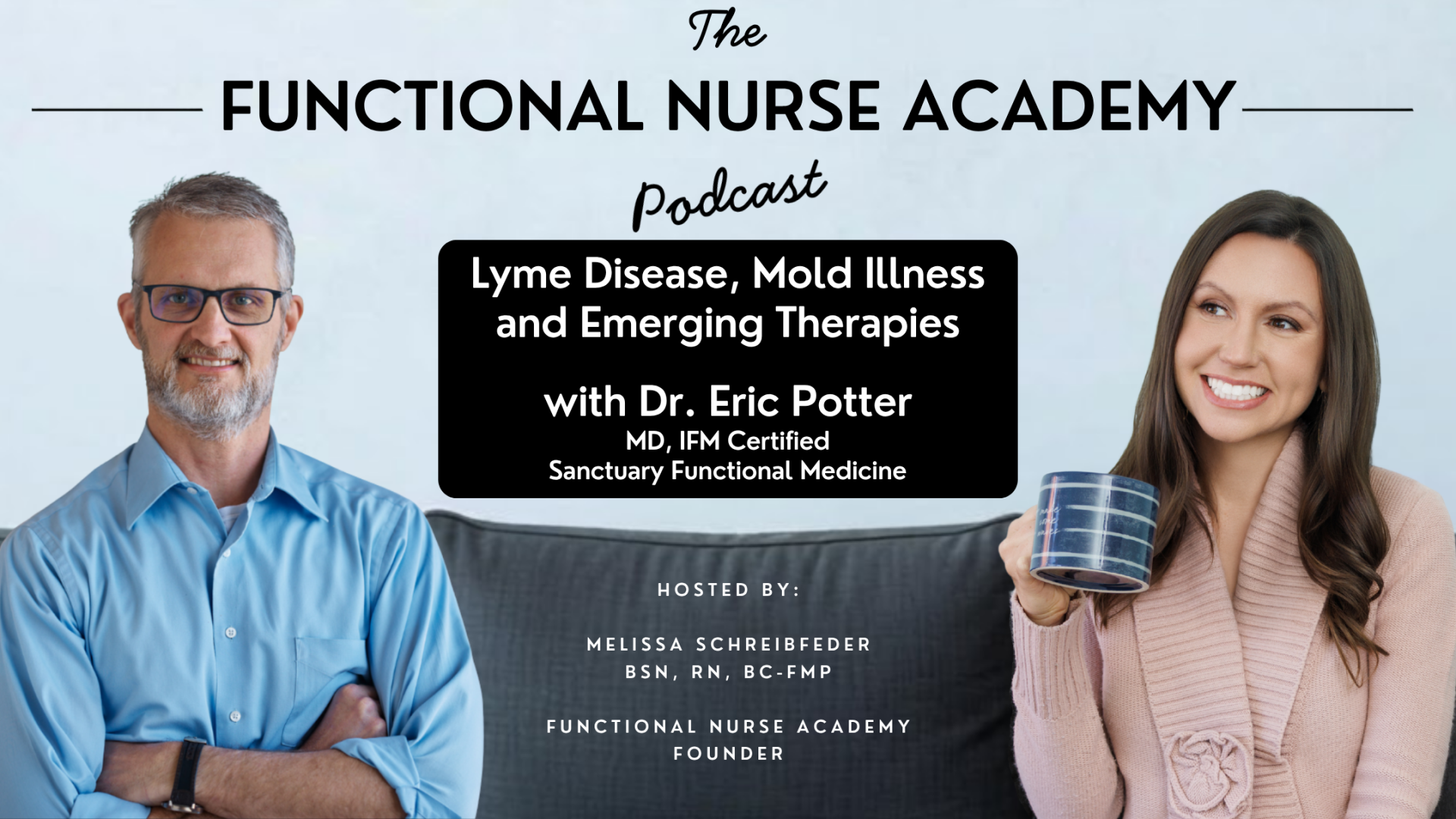
In this episode of the Functional Nurse Academy Podcast, I speak with Dr. Eric Potter, MD, IFMCP, founder of Sanctuary Functional Medicine, about his approach to complex cases involving Lyme disease and mold-related illness. We discuss why a thorough assessment matters, how he thinks through treatment options, and what functional nurses can take from the conversation.
This topic is personal to me. After years of unexplained symptoms and visits with multiple practitioners, Dr. Potter was the physician who diagnosed me with Lyme disease and mold illness. Getting a clearer understanding of what was happening helped me move forward with care.
Why Lyme Disease Can Be Complex
Lyme disease does not look the same in every person. Symptoms may involve fatigue, pain, cognitive difficulties, and other concerns that overlap with many conditions. A careful medical evaluation matters because symptoms alone cannot establish their cause.
Dr. Potter describes the importance of looking at the full clinical picture: a person’s history, symptoms, exposures, examination, and appropriate testing. He also discusses how other tick-borne infections may be considered when a patient’s presentation warrants further evaluation.
For functional nurses, one of the most useful lessons is to resist the urge to explain every symptom with a single finding. Listening closely, organizing a client’s health history, and recognizing when medical evaluation is needed can make a meaningful difference.
The Potential Role of Mold Exposure
Dr. Potter and I also discuss mold-related illness and the challenges that can arise when someone is dealing with more than one health concern at the same time.
Environmental history is an important part of a comprehensive assessment.
Questions about a person’s home, workplace, water damage, and symptom patterns may help their medical team decide whether further evaluation is appropriate. The presence of mold in a building, however, does not by itself establish the cause of someone’s symptoms.
As nurses, we can help clients document relevant information, understand the questions they want to bring to their providers, and find appropriate professionals for medical and environmental evaluation.
Treatment Is More Than Choosing One Therapy
Our conversation covers conventional and emerging approaches that Dr. Potter considers in his practice. These include discussion of antimicrobial therapies, herbal approaches, and supportive therapies such as sauna and hyperbaric oxygen.
The central point is individualization. A therapy that is reasonable for one patient may be inappropriate, poorly tolerated, or unnecessary for another. Dr. Potter discusses factors such as a patient’s symptoms, other health conditions, treatment response, and practical resources when deciding what to consider.
We also talk about safety. For example, Dr. Potter raises the importance of checking for G6PD deficiency before methylene blue is considered, because this medication can pose serious risks for people with that deficiency. That is a useful reminder that “emerging” does not mean risk-free, and that medical therapies require qualified oversight.
What Functional Nurses Need to Know
Functional nurses may be among the professionals who spend the most time hearing a client’s story. That gives us an opportunity to help someone organize a complicated history and communicate it clearly to their healthcare team.
Depending on their license and state scope of practice, nurses can:
-
Take a thorough health and environmental history.
-
Help clients organize symptoms, prior testing, and treatment timelines.
-
Provide education about general health and wellness.
-
Encourage appropriate medical evaluation when symptoms or findings need it.
-
Collaborate with the client's healthcare team
What You’ll Hear in This Episode
Dr. Potter and I discuss:
- Why Lyme disease can be challenging to identify and manage.
- How other tick-borne infections may complicate a case.
- Why environmental history may matter when mold exposure is a concern.
- How he approaches treatment decisions for complex patients.
- Emerging and supportive therapies, including their practical limits and safety considerations.
-
The importance of looking at the whole person while staying attentive to medical oversight.
https://sanctuaryfunctionalmedicine.com/
Frequently Asked Questions About Becoming a Functional Nurse
What is a functional nurse?
What is the difference between a functional practice owned by a NP and RN or LPN?
How Do Non-Advanced Practice Functional Nurses Utilize Laboratory Testing?
While nurse practitioners (NPs) may have the authority to diagnose medical conditions and independently order laboratory testing depending on their state laws, non-advanced practice nurses use laboratory data to educate clients about potential patterns of dysfunction. Laboratory findings can also help guide personalized wellness recommendations and support collaboration with the client's healthcare team to optimize health outcomes.
Please note: Certain states, including New Jersey (NJ) and Rhode Island (RI), have restrictions on laboratory ordering through some functional medicine laboratory networks.
Does Functional Nurse Academy provide continuing education for nurses?
Can I become board certified after completing Functional Nurse Academy?
- Functional Medicine Nurse Specialist | BC-FMNS
- Functional Medicine Practitioner | BC-FMP
- Functional Wellness Professional | BC-FWP
- Christian Wellness Practitioner | BC-CWP (for students completing our optional Christian content)
- Functional Nurse Health Coach | BC-FNHC
- Functional Health Coach | BC-FHC
- HN-BC® (Holistic Nurse Board Certified)
- HNB-BC® (Holistic Nurse Baccalaureate Board Certified)
- AHN-BC® (Advanced Holistic Nurse Board Certified)
- APHN-BC® (Advanced Practice Holistic Nurse Board Certified)
- NC-BC® (Nurse Coach Board Certified)
What is included in enrollment?
- 90 Nursing Contact Hours of functional nursing education
- Multiple Board Certification Pathways in functional medicine and holistic nursing
- Functional Nurse Toolkit with business resources and practice-building tools
- Social Media & Marketing Kit with 9 months of content, brochures, and business card templates
- 40+ Advanced Trainings covering functional medicine and business strategy (available in FNA monthly mentorship library)
- Six Months of FNA’s Monthly Mentorship Program FREE, including live educational trainings and 60 minutes of live Q&A each month, all hosted by FNA Founder Melissa Schreibfeder, BSN, RN, BC-FMP, plus case studies and full access to the mentorship library.
Functional Nurse Academy is the nation’s leading and most comprehensive functional nursing education program for LPNs, RNs, and NPs
Founded in 2022 by Melissa Schreibfeder, BSN, RN, BC-FMP.
We are Dual Accredited, Peer Reviewed and Endorsed
American Holistic Nurses Association Endorsed and Peer Reviewed
Institute for Functional Medicine Interprofessional Partner
Approved Provider of Continuing Nursing Education. Approved for 90 Nursing CEs
Accredited for multiple board certification titles through AANWP, AANWC & AHNCC
Ready to take the next step?
You’ll also have the opportunity to meet me live and get all of your questions answered!
Just click below to save your seat! I hope to see you there!
-Melissa Schreibfeder, BSN, RN, BC-FMP Founder & CEO, Functional Nurse Academy
Contact us