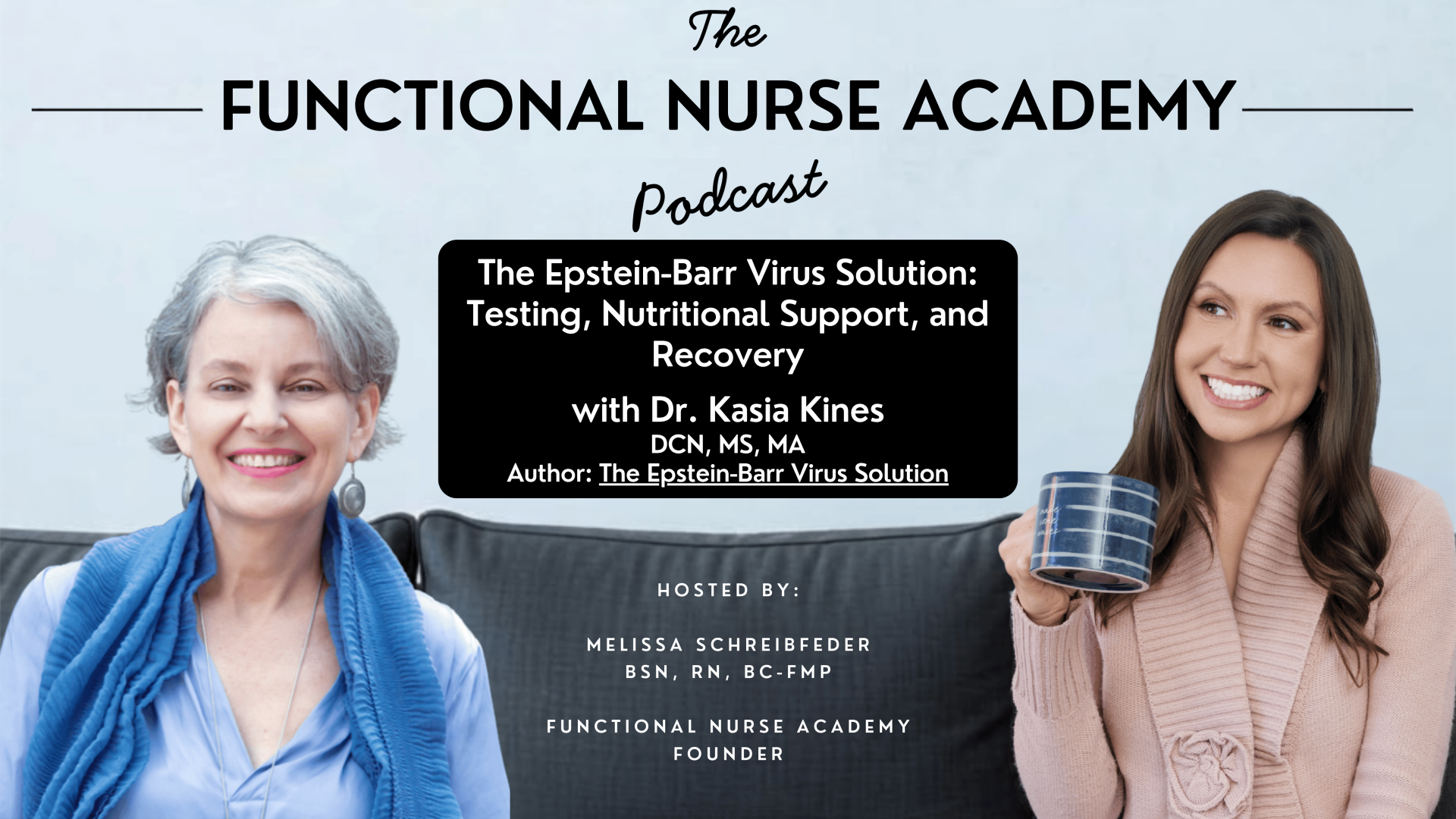
In this expert interview on the Functional Nurse Academy Podcast, Melissa Schreibfeder, BSN, RN, BC-FMP, sits down with Dr. Kasia Kines, a doctor of clinical nutrition and author of The Epstein-Barr Virus Solution, for an in-depth conversation about Epstein-Barr virus (EBV), chronic fatigue, brain fog, EBV testing, nutritional support, and the role functional nurses can play in helping clients navigate complex health concerns.
Dr. Kines shares how her search for answers for people with persistent, unexplained symptoms led her to study the medical literature on EBV and develop her approach to nutritional support. Her work also grew out of a deeply personal experience: losing a close friend who had spent years living with multiple sclerosis.
Throughout this interview, we explore her perspective on EBV assessment and recovery, why she considers the whole person, and how education can help people better understand their health.
What Functional Nurses Can Learn About Epstein-Barr Virus
A central theme of this conversation is the importance of taking persistent symptoms seriously.
Dr. Kines describes people who have spent years seeking answers, trying different protocols, and experiencing only partial improvement. She explains why she considers EBV in certain complex cases, while emphasizing the importance of understanding each person’s history, symptoms, and circumstances.
For functional nurses, the interview offers an opportunity to learn about EBV-related concerns, ask more informed questions, and collaborate with treating providers.
1. Take a Thorough History When Clients Report Persistent Fatigue
Dr. Kines describes profound fatigue, brain fog, and painful or swollen lymph nodes among the concerns she commonly hears from people seeking her help.
She distinguishes this fatigue from ordinary tiredness. Some individuals describe struggling to get out of bed, complete basic activities, or participate in family life.
She also discusses cognitive concerns, including difficulty concentrating, remembering information, reading, and finishing thoughts.
These symptoms deserve careful evaluation. They do not, by themselves, identify EBV as the cause.
Functional nurses can help by documenting when symptoms began, how they affect daily activities, what evaluations have already occurred, and whether previous interventions helped. A thorough history can support more productive conversations with the client’s treating provider.
2. Understand Why Dr. Kines Includes Early Antigen IgG in EBV Assessment
One of the most detailed portions of the interview focuses on EBV antibody testing.
Dr. Kines explains why she includes EBV early antigen IgG in her assessment and why she considers the timing of testing relative to a person’s symptoms. She discusses how testing during a period of feeling better or worse may affect the picture she is evaluating.
Dr. Kines notes that she has rarely encountered elevated early antigen antibodies in people who feel well in her own work. Results still need to be interpreted alongside symptoms, medical history, and the broader testing picture.
3. Consider the Whole Person in Complex Chronic Illness
Melissa shares her personal experience with chronic Lyme disease and elevated EBV antibodies, opening a discussion about overlapping health concerns.
Dr. Kines describes why she looks beyond a single laboratory finding or symptom. Her approach considers nutritional status, stress, environmental exposures, and the circumstances surrounding the person’s illness.
The conversation also addresses the frustration of working through multiple interventions without achieving the improvement someone hoped for.
Functional nursing assessments can help bring these pieces together. Exploring sleep, food intake, daily demands, health history, and environmental concerns may identify areas for education or further evaluation.
The goal is to support a comprehensive assessment while keeping an open mind about other explanations for persistent symptoms.
4. Learn About Dr. Kines’ Nutritional Approach
Dr. Kines discusses nutrients she uses in her approach, including vitamin C, zinc, and selenium, as well as the botanical licorice.
She explains that her protocols involve more than choosing a list of supplements. She considers dosing, gradual introduction, individual tolerance, side effects, and contraindications.
She also describes why she values nutrition education and helping people understand how particular products agree or disagree with them.
This portion of the interview illustrates the importance of individualized guidance. Her discussion describes her approach; it does not establish that a particular supplement or protocol is appropriate for every individual.
Functional nurses can use the conversation to strengthen their understanding of nutritional support.
5. Explore Food, Environmental Exposures, Sleep, and Stress
Dr. Kines emphasizes food and water as practical starting points in her approach. She discusses nutritional adequacy and the environmental exposures she considers when reviewing someone’s history.
Melissa also highlights the importance of asking about the environment in which a client lives. The interview includes discussion of mold concerns and why a supplement-focused approach may overlook other important parts of someone’s situation.
Rather than overwhelming people with numerous changes at once, Dr. Kines describes making gradual adjustments.
Functional nurses can help clients identify manageable priorities, build sustainable habits, and communicate concerns that warrant further assessment.
6. Address Emotional Health, Purpose, and Spiritual Support
The interview also explores the emotional burden of prolonged illness.
Dr. Kines shares her observations about people who feel depleted by stress, perfectionism, overgiving, and difficult life experiences. She discusses helping individuals reconnect with joy, personal aspirations, and a sense of purpose.
Melissa explains why she values addressing emotional health and incorporating prayer and spiritual support when the client welcomes that approach.
These conversations can offer meaningful support without assuming that emotional experiences explain the cause of someone’s illness.
For functional nurses, listening carefully and respecting each client’s beliefs and preferences are essential parts of caring for the whole person.
7. Set Realistic Expectations and Encourage Ongoing Learning
Melissa asks how long people may need to follow Dr. Kines’ approach.
Dr. Kines describes improvement timelines she has observed in her own programs, including how many of her clients feel significantly better within about two months, whereas more complex cases may take six months or longer. She also cautions against immediately pushing activity beyond what the person can tolerate.
Her broader message is that people benefit from learning about their bodies: noticing symptoms, understanding tolerability, and recognizing when something needs attention.
The discussion also acknowledges that not every symptom should automatically be attributed to EBV. Dr. Kines gives the example of learning to distinguish concerns that may relate to another issue, such as iron status.
For functional nurses, this reinforces the value of ongoing assessment, thoughtful referrals, and individualized expectations.
The Role of Functional Nurses
Functional nurses can provide time, education, and support to people navigating persistent fatigue and confusing health information.
This may include taking a comprehensive history, assessing within scope, identifying concerns for further evaluation, discussing nutrition and lifestyle habits, and making referrals when needed.
Across these roles, functional nurses can help people feel heard and become more informed participants in their care.
What You’ll Learn in This Episode
In this expert interview with Dr. Kasia Kines, you’ll hear discussion about:
Epstein-Barr virus and chronic fatigue concerns
Brain fog and difficulty with daily activities
EBV antibody testing and early antigen IgG
Considering symptoms alongside laboratory results
Melissa’s experience with chronic Lyme disease and elevated EBV antibodies
Dr. Kines’ approach to nutritional support
Vitamin C, zinc, selenium, and licorice
Supplement tolerance, side effects, and contraindications
Food quality and nutritional adequacy
Environmental exposures and mold concerns
Sleep, stress, and emotional well-being
Prayer, purpose, and client-directed spiritual support
Individualized recovery expectations
Patient education and collaboration with treating providers
Learn More About Dr. Kasia Kines
During the interview, Dr. Kines directs listeners to EBVHelp.com to explore her educational resources, programs, and consultation options.
Melissa also discusses The Epstein-Barr Virus Solution, which she includes on the reading lists for Functional Nurse Academy and Christian Functional Medicine Academy.
Listen to the full Functional Nurse Academy Podcast interview for the complete conversation about EBV, chronic fatigue, nutritional support, and caring for the whole person.
About Dr. Kasia Kines
Dr. Kines is an international authority on functional nutrition, in particular clinical applications of evidence-based recovery protocols for chronic and acute Epstein-Barr Virus and gastrointestinal and autoimmune conditions. She is highly committed to ongoing research and to blending the best of science and healing practices to best support each person, which translates into popularity and high success rate with her clients. She also is focused on the best ongoing trainings available in the country, which started with her graduate nutrition degree at the prestigious Bastyr University. Dr. Kines is an Amazon best-selling author on Epstein-Barr Virus and is a sought out speaker on the topic. She is also committed to training the new generation of nutritionists, NDs, MDs and functional medicine practitioners in EBV management through The EBV Educational Institute she founded. Dr. Kines enrolled into the first ever functional clinical doctoral program in nutrition as soon as it was offered and before that, she was sought out by Johns Hopkins’ Integrative Medicine and Digestive Center where she worked closely with Dr. Gerard Mullin, a renown functional medicine gastroenterologist. Fully in practice since 2005, Dr. Kines has helped close to 2000 individual clients recover from EBV, Hashimoto’s, SIBO, IBS, auto-immune and gastro-intestinal disorders.
Frequently Asked Questions About Becoming a Functional Nurse
What is a functional nurse?
A functional nurse is a licensed nurse who applies the principles of functional medicine to educate and empower clients by helping them identify and address potential root causes of health concerns. Functional nurses focus on nutrition, lifestyle, sleep, stress management, environmental influences, and other evidence-informed approaches while practicing within their nursing scope of practice.
What is the difference between a functional practice owned by a NP and RN or LPN?
Nurse practitioners may operate a medical practice where permitted by state law. Depending on their state's regulations, NPs may diagnose medical conditions, order and interpret laboratory testing, prescribe medications, and provide medical treatment.
RNs and LPNs can own and operate independent wellness-focused functional nursing practices. Rather than diagnosing or treating medical conditions, they educate and empower clients through personalized wellness plans, nutrition and lifestyle education, health coaching, specialty laboratory education and on going support.
How Do Non-Advanced Practice Functional Nurses Utilize Laboratory Testing?
RNs and LPNs can access both conventional and specialty laboratory testing through partnerships with functional medicine laboratories. These partnerships allow nurses to order testing through a physician network at affordable wholesale pricing, while practicing within their professional scope.
While nurse practitioners (NPs) may have the authority to diagnose medical conditions and independently order laboratory testing depending on their state laws, non-advanced practice nurses use laboratory data to educate clients about potential patterns of dysfunction. Laboratory findings can also help guide personalized wellness recommendations and support collaboration with the client's healthcare team to optimize health outcomes.
Please note: Certain states, including New Jersey (NJ) and Rhode Island (RI), have restrictions on laboratory ordering through some functional medicine laboratory networks.
Does Functional Nurse Academy provide continuing education for nurses?
Functional Nurse Academy is an approved provider of continuing nursing education. Graduates receive 90 nursing contact hours, approved for LPNs, RNs, and NPs.
The program combines comprehensive functional medicine education with practical application, case studies, and business mentorship, giving nurses the knowledge, tools, and confidence to launch and grow their own functional wellness businesses.
Can I become board certified after completing Functional Nurse Academy?
Yes! Functional Nurse Academy graduates are eligible for the following practitioner level board certifications through American Association of Natural Wellness Practitioners (AANWP)
- Functional Medicine Nurse Specialist | BC-FMNS
- Functional Medicine Practitioner | BC-FMP
- Functional Wellness Professional | BC-FWP
- Christian Wellness Practitioner | BC-CWP (for students completing our optional Christian content)
Below are the coaching credentials that our graduates qualify for through the American Association of Natural Wellness Coaches (AANWC)
- Functional Nurse Health Coach | BC-FNHC
- Functional Health Coach | BC-FHC
This program has been peer-reviewed and is endorsed by The American Holistic Nurses Association
CEs earned from the Functional Nurse Academy meet CE eligibility requirements for the following American Holistic Nurses Association board certification titles:
- HN-BC® (Holistic Nurse Board Certified)
- HNB-BC® (Holistic Nurse Baccalaureate Board Certified)
- AHN-BC® (Advanced Holistic Nurse Board Certified)
- APHN-BC® (Advanced Practice Holistic Nurse Board Certified)
- NC-BC® (Nurse Coach Board Certified)
What is included in enrollment?
Functional Nurse Academy is the leading and most comprehensive functional nursing program on the market for LPN, RN and NP. Enrollment includes the following:
- 90 Nursing Contact Hours of functional nursing education
- Multiple Board Certification Pathways in functional medicine and holistic nursing
- Functional Nurse Toolkit with business resources and practice-building tools
- Social Media & Marketing Kit with 9 months of content, brochures, and business card templates
- 40+ Advanced Trainings covering functional medicine and business strategy (available in FNA monthly mentorship library)
- Six Months of FNA’s Monthly Mentorship Program FREE, including live educational trainings and 60 minutes of live Q&A each month, all hosted by FNA Founder Melissa Schreibfeder, BSN, RN, BC-FMP, plus case studies and full access to the mentorship library.
Functional Nurse Academy is the nation’s leading and most comprehensive functional nursing education program for LPNs, RNs, and NPs
Founded in 2022 by Melissa Schreibfeder, BSN, RN, BC-FMP.
We are Dual Accredited, Peer Reviewed and Endorsed
American Holistic Nurses Association Endorsed and Peer Reviewed
Institute for Functional Medicine Interprofessional Partner
Approved Provider of Continuing Nursing Education. Approved for 90 Nursing CEs
Accredited for multiple board certification titles through AANWP, AANWC & AHNCC
Write your awesome label here.
Ready to take the next step?
I’m so happy you’re interested in functional nursing! I’d love to connect with you at my next live informational + Q&A webinar, where you’ll learn all about functional nursing, how nurses across the country are launching their own functional wellness businesses, and how you can get started.
You’ll also have the opportunity to meet me live and get all of your questions answered!
Just click below to save your seat! I hope to see you there!
-Melissa Schreibfeder, BSN, RN, BC-FMP Founder & CEO, Functional Nurse Academy
You’ll also have the opportunity to meet me live and get all of your questions answered!
Just click below to save your seat! I hope to see you there!
-Melissa Schreibfeder, BSN, RN, BC-FMP Founder & CEO, Functional Nurse Academy
Contact us
Thank you!
Functional Nurse Academy is the nation’s leading and most comprehensive functional nursing program for LPNs, RNs, and nurse practitioners. Founded in 2022 by Melissa Schreibfeder, BSN, RN, BC-FMP.